Dry & Wet Wash
A tailored exterior cleaning process selected around your aircraft, its condition, the facility, and the result you want.
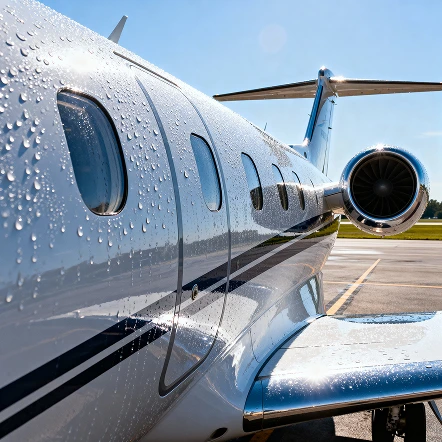
Aircraft care tailored to the condition.
A dry wash uses aviation-suitable product and microfiber methods without a full water rinse. A wet wash uses water, aircraft-appropriate cleaners, and controlled rinsing.
What we do
- Review the aircraft, access, and visible condition
- Select an appropriate dry or wet method
- Clean accessible exterior surfaces and glass
- Address high-soil areas and complete a final walk-around
What owners and operators ask.
What is the difference between a dry wash and wet wash?
A dry wash avoids a full water rinse; a wet wash uses water, aircraft-appropriate cleaners, and controlled rinsing. The aircraft, contamination, location, and facility determine the method.
Can an aircraft be cleaned inside a hangar?
Often, yes, when the method is compatible with hangar rules, drainage restrictions, available space, and access.
How long does an aircraft wash take?
Timing varies with aircraft size, condition, contamination, access, and wash method. An estimated window follows review of the request.
Can LM Aviation clean aircraft windows?
Yes. Exterior aircraft windows can be cleaned using aircraft-appropriate products and methods, subject to material condition and requirements.
Do you offer recurring washes?
Yes. LM Aircraft Care provides scheduled appearance-maintenance plans.
How is heavy belly contamination handled?
Heavy oil, soot, and grease may require added time, products, and labor, so the condition is evaluated separately.